Types of Foundation Cracks in Renfrew County
Not all foundation cracks are the same, and the repair method depends on the type, width, and location of the crack. In Renfrew County, the most common foundation cracks fall into two categories: hairline/non-structural cracks and structural cracks.
Hairline Cracks (Non-Structural)
Hairline cracks are less than 1/8 inch wide and typically result from concrete shrinkage during the curing process. Almost all poured concrete foundations develop some hairline cracks over time. These cracks are usually not a structural concern, but they can allow water to seep through, especially during Renfrew County's wet spring season. In areas with high hydrostatic pressure, even a hairline crack can become a pathway for significant water entry.
Structural Cracks
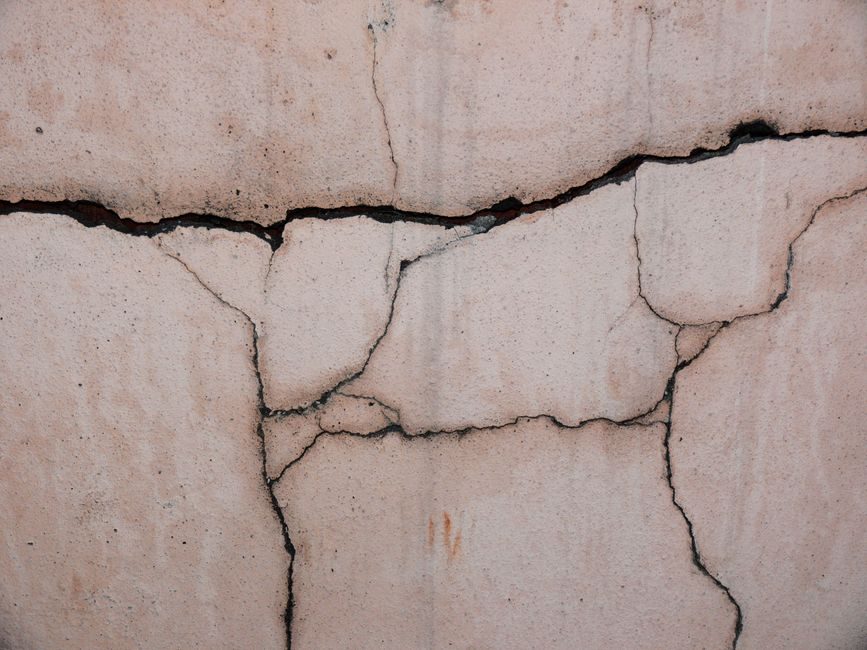
Structural cracks are wider than 1/4 inch, may be accompanied by horizontal displacement, or appear as stair-step patterns in block foundations. These cracks indicate movement in the foundation and require professional assessment. In Renfrew County, structural cracks are most commonly caused by:
- Frost heave — The freeze-thaw cycle in Renfrew County's cold winters (frost line reaches 4–5 feet) can lift and shift foundation walls. This is particularly common in clay soil areas where the soil holds more moisture and expands more dramatically when frozen.
- Soil settlement — Sandy or gravelly soils common along the Ottawa River can settle unevenly under the weight of the foundation, causing differential movement and cracking.
- Hydrostatic pressure — The same groundwater pressure that causes basement leaks can also push inward on foundation walls over time, particularly on walls that were not designed for the water table present in the area.
- Tree root growth — Large trees close to the foundation can affect soil moisture levels and root pressure, leading to cracking in some cases.
Crack Repair Methods
Polyurethane Injection
Polyurethane injection is used for actively leaking cracks. The process involves drilling small ports along the crack at intervals of 6–8 inches, installing injection ports, and injecting a liquid polyurethane resin under low pressure. The resin reacts with water, expanding to 20–30 times its volume to create a flexible, watertight seal that moves with the foundation as it undergoes minor thermal or moisture-related movement.
Polyurethane injection is ideal for Renfrew County homes experiencing seasonal water infiltration through foundation cracks. The flexible seal accommodates the freeze-thaw movement that is normal in this climate. Cost per crack typically ranges from $250 to $600 depending on crack length and accessibility.
Epoxy Injection
Epoxy injection is used for non-leaking structural cracks where the goal is to restore the concrete's original structural strength. A low-viscosity epoxy is injected under pressure into the crack, where it bonds chemically with the concrete and hardens to a strength greater than the surrounding concrete.
Epoxy injection is appropriate for cracks caused by settlement or minor structural movement that has stabilized. It is not suitable for actively moving cracks, and it does not provide the same flexibility as polyurethane for cracks that may experience seasonal movement. Cost ranges from $300 to $800 per crack depending on depth and length.
Carbon Fibre Straps
When foundation walls are bowing inward due to hydrostatic pressure — a condition known as wall deflection — crack injection alone is not sufficient. Carbon fibre straps are high-strength carbon fibre strips bonded vertically to the interior of the wall using epoxy. They act like steel reinforcement, resisting further inward movement of the wall.
Carbon fibre reinforcement is becoming increasingly popular in Renfrew County because it is less invasive than installing steel I-beams or wall anchors. It can be installed from the interior without excavation, preserves the finished interior space, and provides long-term structural reinforcement. Cost ranges from $800 to $2,500 per strap depending on wall height and the number of straps required.
Frost Heave in Renfrew County
Frost heave is a significant contributor to foundation cracking in Renfrew County. When the ground freezes in winter, moisture in the soil forms ice lenses — layers of ice that grow as water is drawn upward from deeper soil. These ice lenses can lift the foundation or create uneven pressure against foundation walls.
The freeze-thaw cycle in Renfrew County is particularly damaging because:
- The frost line reaches 4–5 feet, affecting the full depth of the foundation
- The clay soils common in the Ottawa Valley hold significant moisture, producing more ice lens growth
- Properties on the Canadian Shield are particularly susceptible to frost heave because thin soil over bedrock creates temperature differentials that cause uneven frost penetration
- The rapid spring thaw concentrates water in a short period, saturating soil and accelerating movement
The best defence against frost heave damage is proper foundation drainage that keeps soil around the foundation as dry as possible before winter arrives. This is why fall maintenance — including checking gutters, downspouts, and surface grading — is so important for Renfrew County homeowners.
Cost Table
| Repair Method | Cost Range (CAD) | Suitable For |
|---|---|---|
| Polyurethane crack injection (per crack) | $250 – $600 | Actively leaking cracks, any width up to 1/4 inch |
| Epoxy crack injection (per crack) | $300 – $800 | Non-leaking structural cracks, stable foundations |
| Carbon fibre strap (per strap) | $800 – $2,500 | Bowing walls, structural reinforcement |
| Hydraulic cement patch (small area) | $50 – $200 | Very small, non-structural holes and spalls |
| Wall anchor system (per anchor) | $1,500 – $4,000 | Severe wall bowing requiring exterior anchoring |
| Engineered assessment | $500 – $2,000 | Required for structural cracks over 1/4 inch |
When to Seek Professional Assessment
While small hairline cracks can sometimes be managed with surface sealants, any of the following signs indicate a need for professional assessment:
- Cracks wider than 1/4 inch
- Horizontal cracks in poured concrete foundations
- Stair-step cracks in block or stone foundations
- Multiple cracks in a single wall section
- Cracks accompanied by inward wall displacement (bowing)
- Cracks that continue to grow over time
- Water actively flowing through a crack during wet weather
- Cracks that appear after excavation or construction near the foundation
In these cases, a structural engineer or experienced waterproofing contractor should assess the foundation before any repair is attempted. See our Hiring Guide for how to find qualified professionals in Renfrew County.