Understanding Basement Waterproofing in Renfrew County
Renfrew County presents unique challenges for basement waterproofing that homeowners in other parts of Ontario may not face. The county sits largely on the Canadian Shield, a massive Pre-Cambrian granite formation that shapes both the landscape and the groundwater behaviour beneath every property in the region. Spring flooding from melting snowpack, seasonal frost heave cycles, and the shallow soil depth over bedrock create conditions that demand careful attention to foundation drainage and waterproofing.
Every spring, properties across Renfrew County — from Pembroke and Petawawa to Renfrew, Arnprior, Deep River, and the many rural townships — contend with the enormous volume of meltwater released as temperatures rise. The snowpack in the Ottawa Valley and surrounding Shield terrain can hold the equivalent of 6–12 inches of water. When this melts over a period of days or weeks, the ground becomes saturated, and hydrostatic pressure against foundation walls rises sharply. This is the single most common cause of basement water intrusion in the region.
The shallow bedrock that underlies much of Renfrew County adds another layer of complexity. Many homes in areas like Eganville, Barry's Bay, Killaloe, Combermere, and the Madawaska Valley have foundations built into or near bedrock. Because bedrock does not absorb water the way deep soil does, rainfall and snowmelt run off the rock surface and concentrate around foundation walls. This can create persistent moisture problems that standard perimeter drainage alone cannot fully address.
Understanding these local conditions is the first step toward making informed decisions about basement waterproofing. The right approach depends on the specific soil conditions, foundation type, local water table, and the nature of any existing water problems. This guide provides the information Renfrew County property owners need to evaluate their options, understand costs, and work knowledgeably with local contractors.
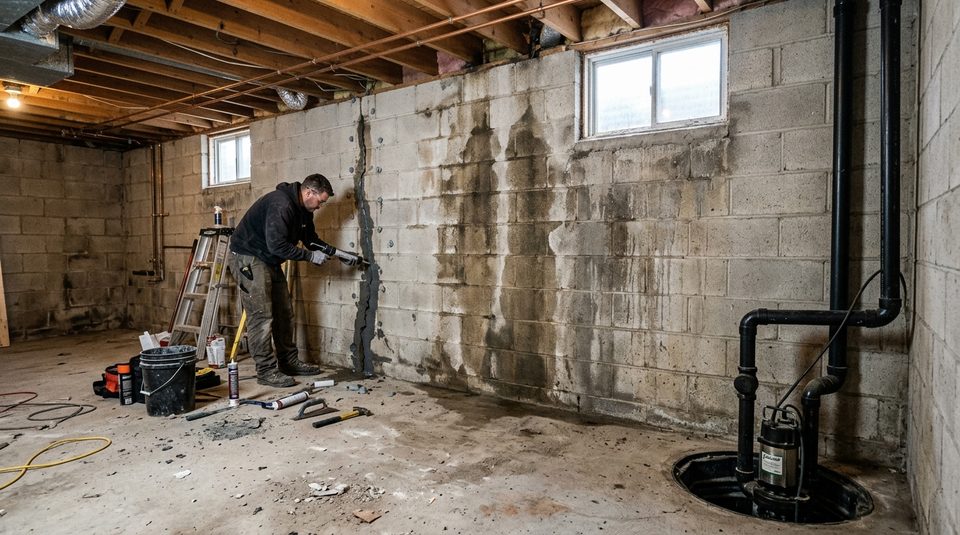
Basement Waterproofing Cost Overview — Renfrew County
Waterproofing costs vary significantly based on the method, the size of the property, the depth of the foundation, and site access conditions. The following table provides typical cost ranges for common waterproofing solutions in Renfrew County as of 2026.
| Waterproofing Method | Typical Cost Range (CAD) | Best For |
|---|---|---|
| Interior drainage system (perimeter) | $3,000 – $7,000 | Homes with moderate seepage, finished basements |
| Exterior waterproofing (full excavation) | $10,000 – $25,000+ | Severe leakage, permanent fix for foundations |
| Crack injection (per crack, epoxy or polyurethane) | $250 – $800 | Isolated foundation wall cracks |
| Sump pump installation (pump only) | $400 – $1,500 | Homes with existing drainage, new pedestal pump |
| Window well drainage | $200 – $600 per window well | Window wells prone to filling with water |
| Full exterior membrane + drainage board | $12,000 – $30,000 | New construction or fully exposed foundations |
Note that these are general ranges. Actual costs depend on the perimeter length of the foundation, excavated depth, soil type, and contractor rates in your specific area of Renfrew County. Properties in more remote areas such as the Madawaska Highlands or deep Shield sections may see higher costs due to mobilization and access considerations.
Waterproofing Solutions for Renfrew County Homes
Basement Waterproofing
Complete guide to interior and exterior basement waterproofing methods for Renfrew County homes. Membrane systems, drainage board, weeping tile, and cost comparisons.
Learn MoreInterior Drainage Systems
Interior drain tile, sump pumps, battery backup systems, and perimeter drainage for Renfrew County basements. Installation, maintenance, and cost information.
Learn MoreFoundation Crack Repair
Epoxy and polyurethane crack injection, carbon fibre straps, and structural repairs for foundation walls affected by frost heave and soil movement in Renfrew County.
Learn MoreGuides & Resources
Cost breakdowns, Ontario Building Code requirements, seasonal maintenance schedules, and contractor hiring checklists for Renfrew County property owners.
Explore GuidesSpring Snowmelt and Flooding in Renfrew County
Spring is the most critical season for basement waterproofing in Renfrew County. The winter snowpack across the Ottawa Valley and surrounding Shield terrain can be substantial — commonly 40–80 cm of snow containing hundreds of cubic metres of water per acre. As temperatures rise in March and April, this snow melts rapidly, with much of the water unable to infiltrate the still-frozen ground.
The result is massive surface runoff and saturated soils that persist for weeks. In areas of Renfrew County with shallow bedrock or clay soils — common around Pembroke, Petawawa, and many rural townships — this saturation creates sustained hydrostatic pressure against foundation walls. Cracks, cove joints (where the wall meets the floor slab), and porous concrete become pathways for water entry.
This seasonal pattern is why many Renfrew County homeowners first discover basement moisture problems in late March or April. A waterproofing system that works for the rest of the year may be overwhelmed by the sheer volume of spring meltwater if it was not designed with Renfrew County's spring conditions in mind.
Spring Preparedness Tips
- Ensure downspouts extend at least 6 feet from the foundation before spring melt
- Confirm your sump pump is operational and fitted with a battery backup
- Clear snow away from foundation walls before temperatures rise
- Inspect window wells for accumulated ice and debris
- Check that grading slopes away from the house, not towards it
Canadian Shield Drainage Challenges
The Canadian Shield's granite bedrock lies close to the surface across much of Renfrew County. While this creates stunning landscapes around the Madawaska Highlands, Bonnechere Valley, and areas near Barry's Bay and Killaloe, it presents persistent drainage challenges for homeowners.
When bedrock sits within a few feet of the surface — or directly beneath a foundation — water has nowhere to percolate downward. Instead, it flows along the surface of the rock, collecting against foundation walls. This phenomenon, known as "bedrock seepage," can make a basement feel chronically damp even when there are no visible cracks or obvious failures in the foundation structure.
Homes on the Shield require drainage solutions that account for this condition. Standard weeping tile installed at the footing depth may not function effectively if bedrock prevents the tile from being placed at the correct elevation. In these situations, an interior drainage system combined with a robust sump pump can be the most practical solution.
The Ontario Building Code (OBC) provides guidelines for foundation drainage in Part 9. Property owners in Shield areas should ensure that any waterproofing project meets or exceeds OBC requirements for their specific foundation type and soil conditions. The Code can be referenced at Ontario Regulation 120/332.
Key Considerations for Renfrew County Property Owners
When evaluating basement waterproofing options in Renfrew County, several factors unique to the region should influence your decision:
Frost Depth
The frost line in Renfrew County typically reaches 4–5 feet. Exterior waterproofing systems must be installed below this depth to avoid frost heave damage to the membrane and drainage board. Interior systems are not affected by frost depth but must still connect to a drainage outlet or sump pump that handles seasonal water volume changes.
Soil Types
Renfrew County has a mix of soil types — clay in the Ottawa Valley near Renfrew and Arnprior, sandy deposits along the Ottawa River near Pembroke and Petawawa, and thin soil over bedrock in the Shield areas to the west. Each soil type affects water behaviour differently. Clay soils hold water and expand, creating pressure against walls. Sandy soils drain quickly but may cause settling. Thin soil over bedrock produces rapid runoff that concentrates around foundations.
Water Table Variability
The water table across Renfrew County varies dramatically between seasons and between locations. Properties near the Ottawa River, Bonnechere River, Madawaska River, and numerous lakes experience higher water tables during spring runoff. Homes built on elevated Shield ridges may have very deep water tables. A waterproofing strategy should account for the worst-case seasonal conditions, not typical dry weather.
Age of Home
Renfrew County has a wide range of housing stock — from century-old homes in Pembroke and Renfrew to newer subdivisions in Petawawa and Arnprior. Older homes may have foundations made of stone, brick, or early concrete that require different waterproofing approaches than modern poured concrete foundations. Original weeping tile systems may be clogged or collapsed in older properties.
Communities Served Across Renfrew County
This guide covers basement waterproofing considerations for all communities in Renfrew County, including the Ottawa Valley, the Bonnechere Valley, the Madawaska Valley, and the Upper Ottawa Valley regions:
Frequently Asked Questions
How much does basement waterproofing cost in Renfrew County?
Basement waterproofing costs in Renfrew County typically range from $3,000 for a simple interior drainage system to $25,000+ for full exterior excavation and waterproofing of an average single-family home. Costs depend on perimeter length, access, depth, and the method chosen. See the Cost Guide for a detailed breakdown.
Do I need a permit for basement waterproofing in Ontario?
Exterior excavation and structural foundation work in Ontario typically requires a building permit from your local municipality. Interior drainage and sump pump installations may not require a permit, but it is always best to check with your municipal building department. See our Regulations Guide for more details.
What causes basement leaks in Renfrew County?
The most common causes are spring snowmelt, heavy rainfall overwhelming perimeter drainage, hydrostatic pressure from saturated soil against foundation walls, cracks from frost heave on the Canadian Shield, and poorly functioning or collapsed weeping tile systems.
What is the difference between interior and exterior waterproofing?
Exterior waterproofing excavates around the foundation to apply a waterproof membrane and drainage board on the outside. Interior waterproofing installs drainage along the base of the foundation wall inside the basement, directing water to a sump pump. Exterior is more comprehensive but significantly more expensive.
How long does basement waterproofing last?
Exterior waterproofing systems with modern membranes and drainage boards typically last 30–50 years or more. Interior drainage systems with properly maintained sump pumps can last 20–30 years before component replacement is needed.
What is hydrostatic pressure?
Hydrostatic pressure is the force exerted by groundwater against your foundation walls and floor. When soil becomes saturated during spring thaw or heavy rain, this pressure pushes water through cracks, joints, and porous concrete. Proper drainage systems relieve this pressure before it causes damage.
Related Resources
Cost Guide
Detailed cost breakdowns for every waterproofing method used in Renfrew County, with factors that influence pricing.
View CostsRegulations
Ontario Building Code requirements, permits, and contractor obligations for waterproofing work in Renfrew County.
Read GuideHiring Guide
Step-by-step process for finding and vetting waterproofing contractors in Renfrew County.
Read GuideSeasonal Maintenance
Spring, summer, fall, and winter maintenance checklist to protect your basement year-round.
Read Guide